Rooster Day Mural | Demopolis, Alabama
Celebrating a One-of-a-Kind Demopolis Tradition
Alabama mural artist Banks Compton created this colorful exterior mural for the Chanticleer Center in downtown Demopolis, Alabama, inspired by one of the city's most distinctive traditions: Rooster Day.
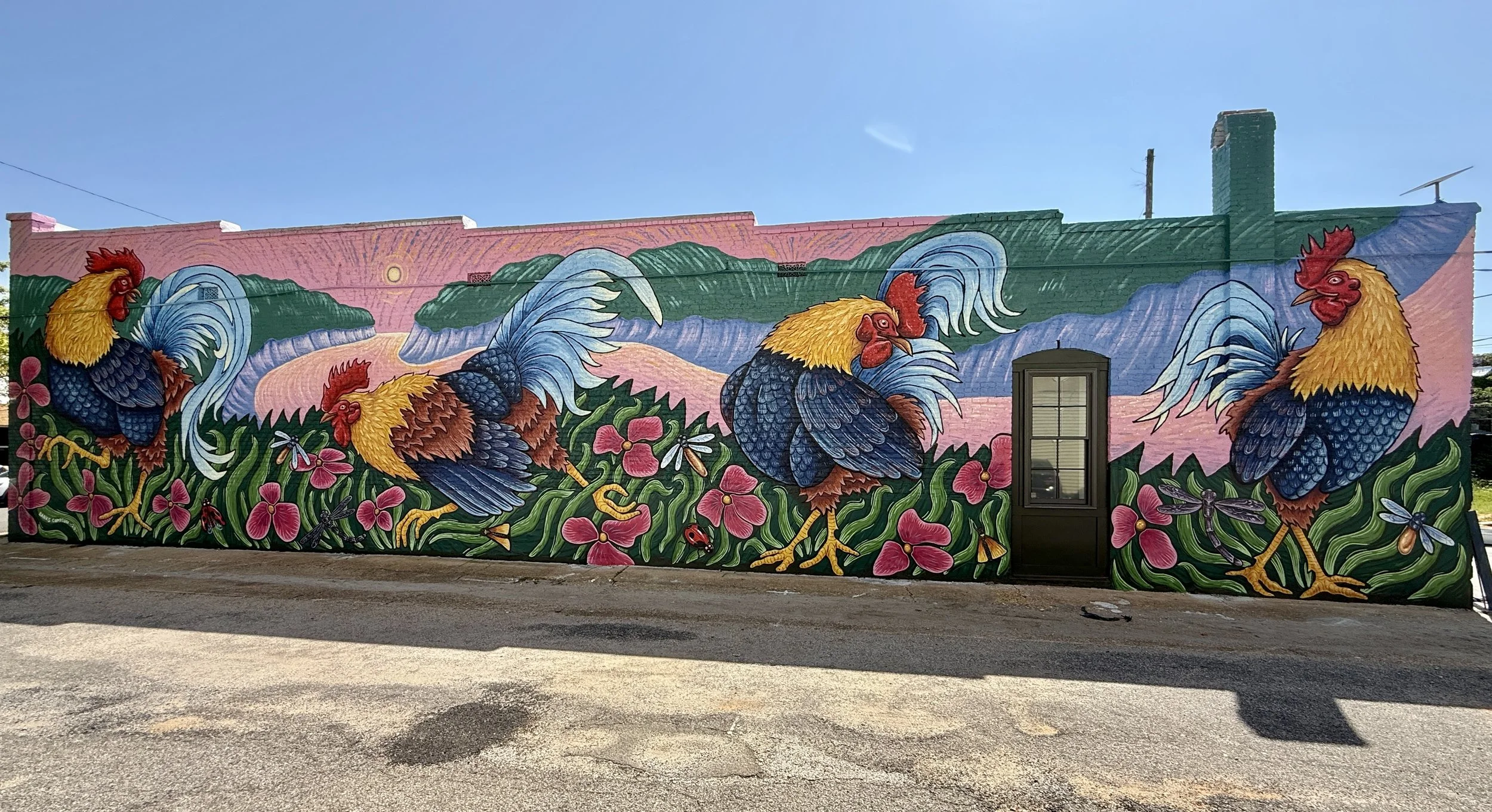
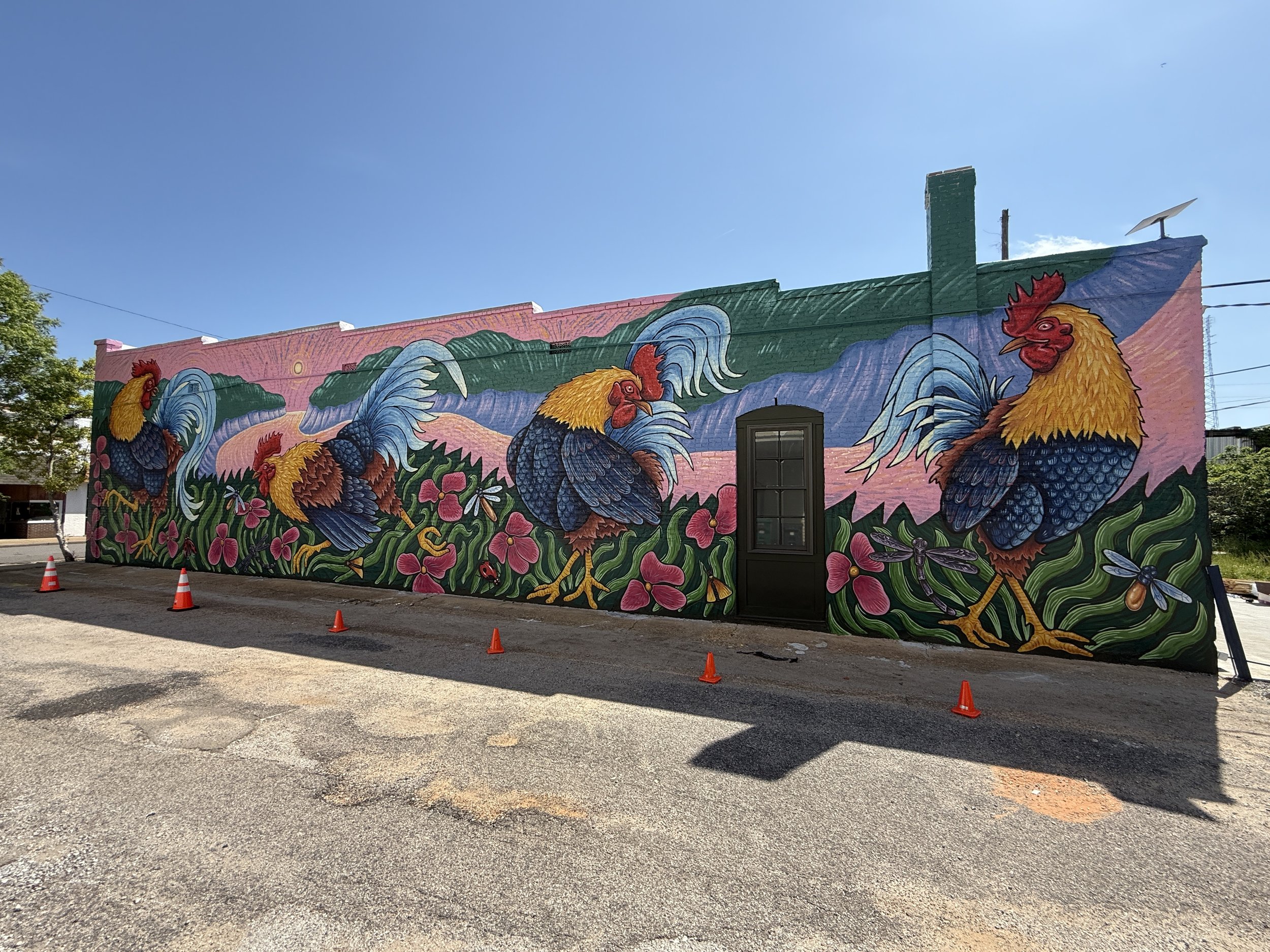
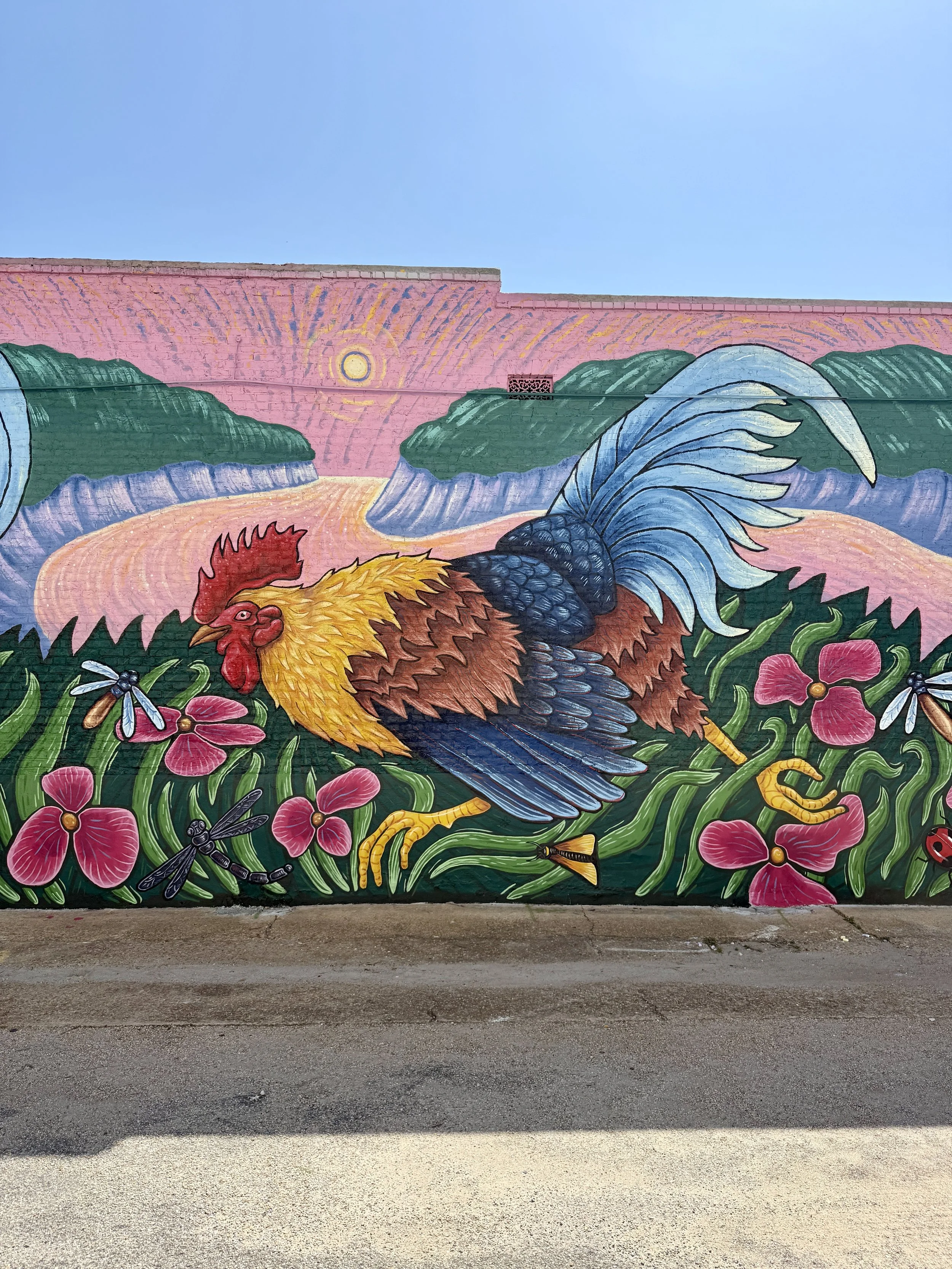
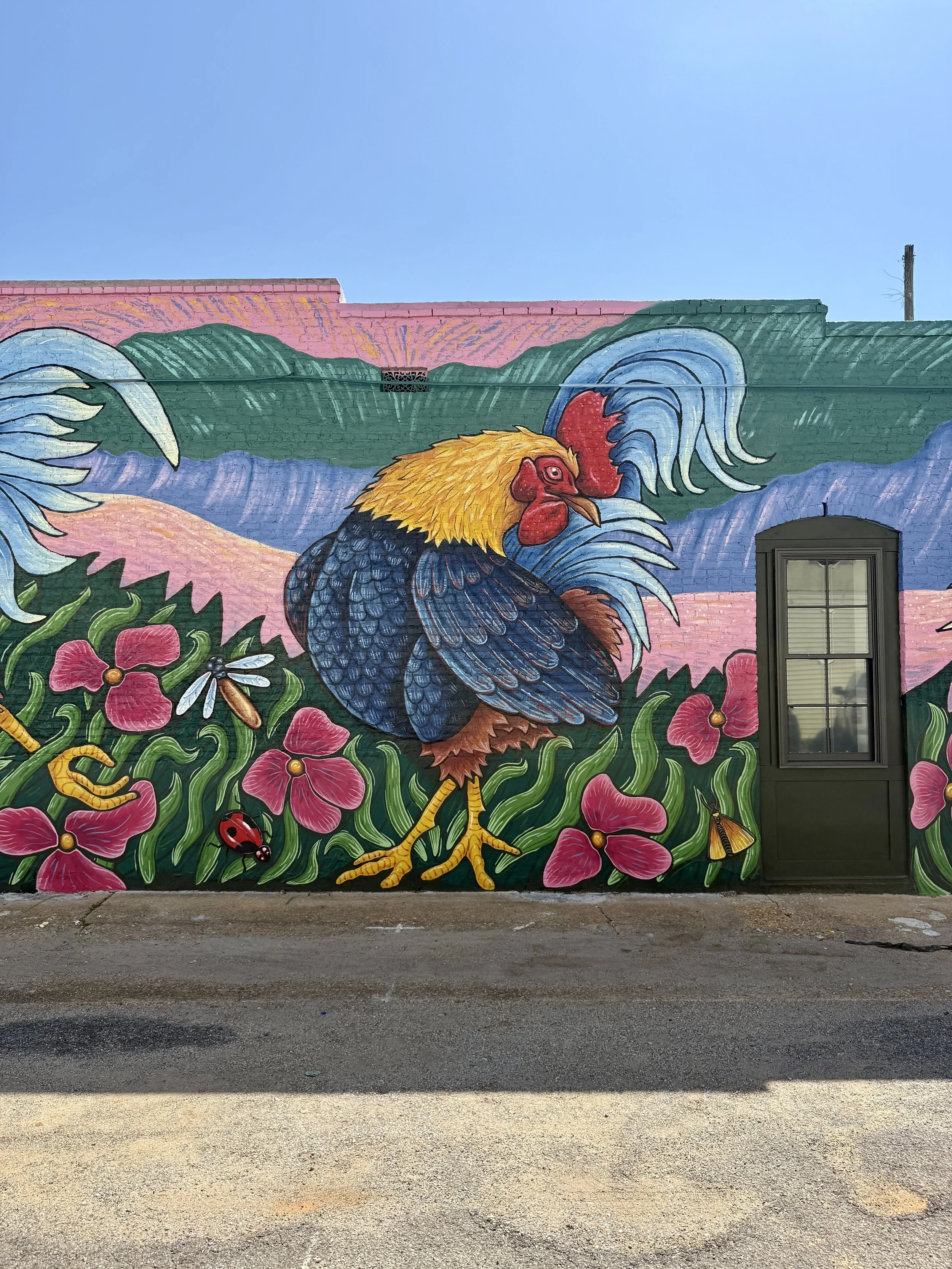
Four monumental roosters stand among oversized flowers and insects overlooking a landscape inspired by the Tombigbee River and the white cliffs of Demopolis.
The mural was created in connection with the city's annual Rooster Day celebration, with local children and community members invited to help paint portions of the flowers, insects, and other details across the lower section of the wall.
The result is a mural that doesn't simply depict a piece of Demopolis history. It was created with participation from the community whose story it celebrates.
Project at a Glance
Project: Chanticleer Center Rooster Day Mural
Location: Downtown Demopolis, Alabama
Artist: Banks Compton
Building: Chanticleer Center
Building Owner: Lisa Compton
Architect: Lana Smelley
Artwork: Exterior Community Mural
Inspiration: Rooster Day & the 1919 Rooster Auction
Featured Imagery: Roosters, Tombigbee River, White Cliffs, Flowers & Insects
Community Engagement: Live Community Painting During Rooster Day
Recognition: Main Street Alabama — Building Design Non-Historic
Recognized Project: Chanticleer Center & Banks Compton Mural
Completed: 2025
Designed for the Chanticleer Center
The building itself was an important part of the mural's story.
The Chanticleer Center transformed a previously neglected downtown property into a multi-use space featuring an art gallery, rentable offices, and shared amenities designed to support creativity, collaboration, and business in downtown Demopolis.
The redevelopment was led by building owner Lisa Compton and architect Lana Smelley, with Banks Compton's exterior mural becoming the public-facing artistic element of the project.
Inside the Chanticleer Center, Banks also has artwork and photography documenting other mural projects on permanent display, further connecting the building with art and creative activity.
Rather than creating artwork that could have been placed on any building, the mural was designed around the identity of this particular property and its relationship to Demopolis.
The name Chanticleer inspired the roosters. Rooster Day provided the historical connection. The Tombigbee River and white cliffs established the location. Community participation connected the artwork to the people who experience it.
Why Roosters?
Roosters have an unusual but important place in the history of Demopolis.
In 1919, Demopolis held the Great Rooster Auction as part of an effort to raise money for a bridge across the Tombigbee River. That piece of local history eventually inspired the modern Rooster Day celebration, which brings the community together in downtown Demopolis.
The Chanticleer mural transforms that story into a permanent piece of public art.
The connection is even more appropriate because “chanticleer” is a traditional name for a rooster, tying the identity of the building directly to the history celebrated by the mural.
Four Roosters Over the Tombigbee
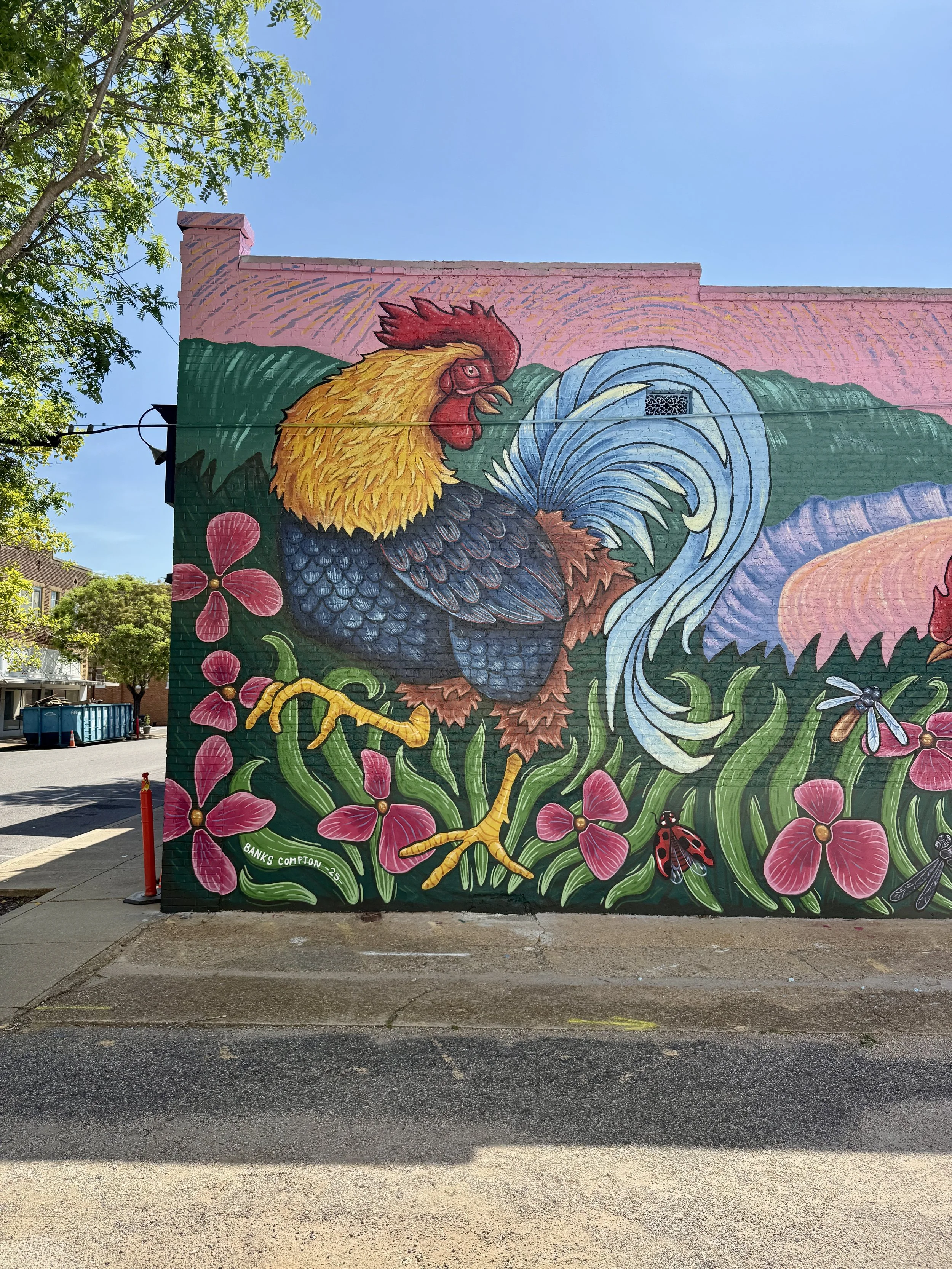
Four enormous roosters dominate the composition, each painted with its own posture and personality.
Behind them, the landscape opens onto the Tombigbee River with the distinctive white cliffs visible in the distance, grounding the whimsical composition in a landscape immediately connected to Demopolis.
The roosters are intentionally monumental. Their oversized bodies, sweeping blue tail feathers, expressive faces, and bright colors create movement across the long exterior wall.
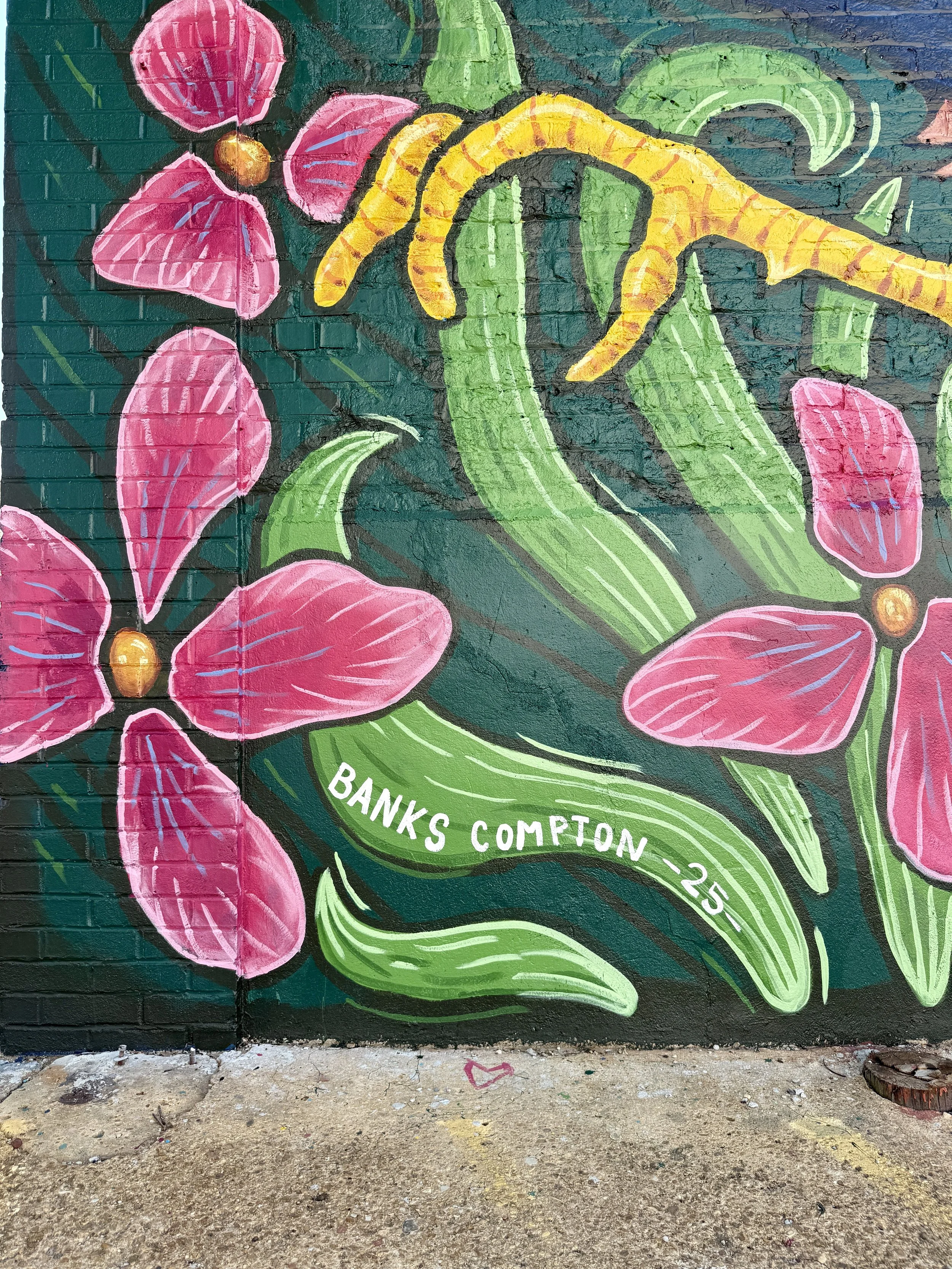
Across the foreground, large flowers, grasses, ladybugs, dragonflies, and other insects create a second layer of imagery for pedestrians to discover as they approach the mural.
The combination of recognizable local landscape and exaggerated animal characters gives the mural a playful quality while keeping its story firmly rooted in Demopolis.
Painted With the Demopolis Community
Community participation was an important part of creating the mural.
During Rooster Day, local children and community members were invited to pick up brushes and help paint sections of the artwork.
Banks prepared areas throughout the lower portion of the mural where participants could contribute to flowers, insects, and other details while the larger composition was being completed.
For younger participants especially, the experience provided an opportunity to do more than watch a professional artist work. They were able to contribute directly to a permanent piece of public art in their own community.
Those contributions remain visible in the completed mural.
The finished artwork therefore contains not only Banks' interpretation of Demopolis but also physical marks created by the people who live there.
Creating Public Art During Rooster Day
Painting the mural alongside the Rooster Day celebration allowed the creative process itself to become part of the community event.
Festival visitors could watch the artwork develop, talk with the artist, and participate in painting sections of the wall.
The mural was also featured by WAKA during its coverage of the 2025 Rooster Day celebration, documenting the relationship between the artwork, the Chanticleer Center, and the larger festival.
Instead of unveiling a mural only after it was finished, the community was able to experience its creation.
Once the festival ended, the artwork remained behind as a permanent reminder of the history and community spirit celebrated during Rooster Day.
Recognized by Main Street Alabama
The Chanticleer Center and Banks Compton mural were recognized by Main Street Alabama in the Building Design Non-Historic category for the transformation of the downtown Demopolis property.
The recognition highlighted the redevelopment of the once-neglected building into a multi-use space supporting art, business, creativity, and collaboration.
Banks' mural was specifically included as part of the recognized project.
Main Street Alabama noted the mural's inspiration from Demopolis's 1919 Rooster Auction and its role in celebrating local heritage while fostering community pride and connection.
The recognition also highlighted the larger project's impact on foot traffic, business growth, and district appeal, describing the Chanticleer Center as a model of adaptive reuse within downtown revitalization.
For the mural, the recognition demonstrates how public art can contribute to something larger than the appearance of a single wall.
When murals are connected thoughtfully to architecture, history, business, events, and community participation, they can become part of a broader strategy for bringing activity and identity back into a downtown district.
Public Art and Downtown Revitalization
The Chanticleer mural demonstrates the role public art can play alongside private investment, adaptive reuse, historic downtowns, community events, and local storytelling.
Every major element of the artwork has a connection to its surroundings.
The roosters reference a distinctive piece of Demopolis history. The Tombigbee River and white cliffs establish a sense of place. The Chanticleer name connects the mural directly to the building. The flowers and insects preserve the contributions of community members who helped paint them.
Together, those elements create artwork that could not simply be moved to another city.
It belongs specifically to Demopolis.
Murals That Tell the Story of a Place
Banks approaches public murals by looking for the stories, landmarks, natural environments, traditions, and people that make a community recognizable.
Rather than simply decorating a blank wall, the goal is to create artwork that feels connected to the place where it exists.
For the Chanticleer Center, that meant combining an unusual piece of local history with the natural landscape of the Tombigbee River, the identity of a newly redeveloped downtown property, and the participation of the Demopolis community.
The finished mural turns those individual stories into a single large-scale image visible in the heart of downtown.
About Banks Compton
Banks Compton is an Alabama mural artist and RISD alumnus creating large-scale murals and public art throughout Alabama and across the United States.
His work frequently draws inspiration from nature, local history, cultural traditions, and community stories. Banks works collaboratively with clients to develop site-specific artwork that reflects both the environment where it is painted and the people who experience it.
Community participation is also incorporated into many of his public-art projects, allowing residents, students, and young artists to contribute directly to permanent artwork within their communities.
Looking for a Mural Artist in Demopolis or West Alabama?
Banks creates custom murals and community public-art projects for cities, Main Street organizations, downtown developments, businesses, schools, tourism organizations, institutions, and community groups throughout Demopolis, West Alabama, and communities across the state.
Projects can incorporate local history, wildlife, landmarks, cultural traditions, community participation, interactive elements, and site-specific storytelling.