

American & Alabama Flag Silo Murals | Selma, Alabama
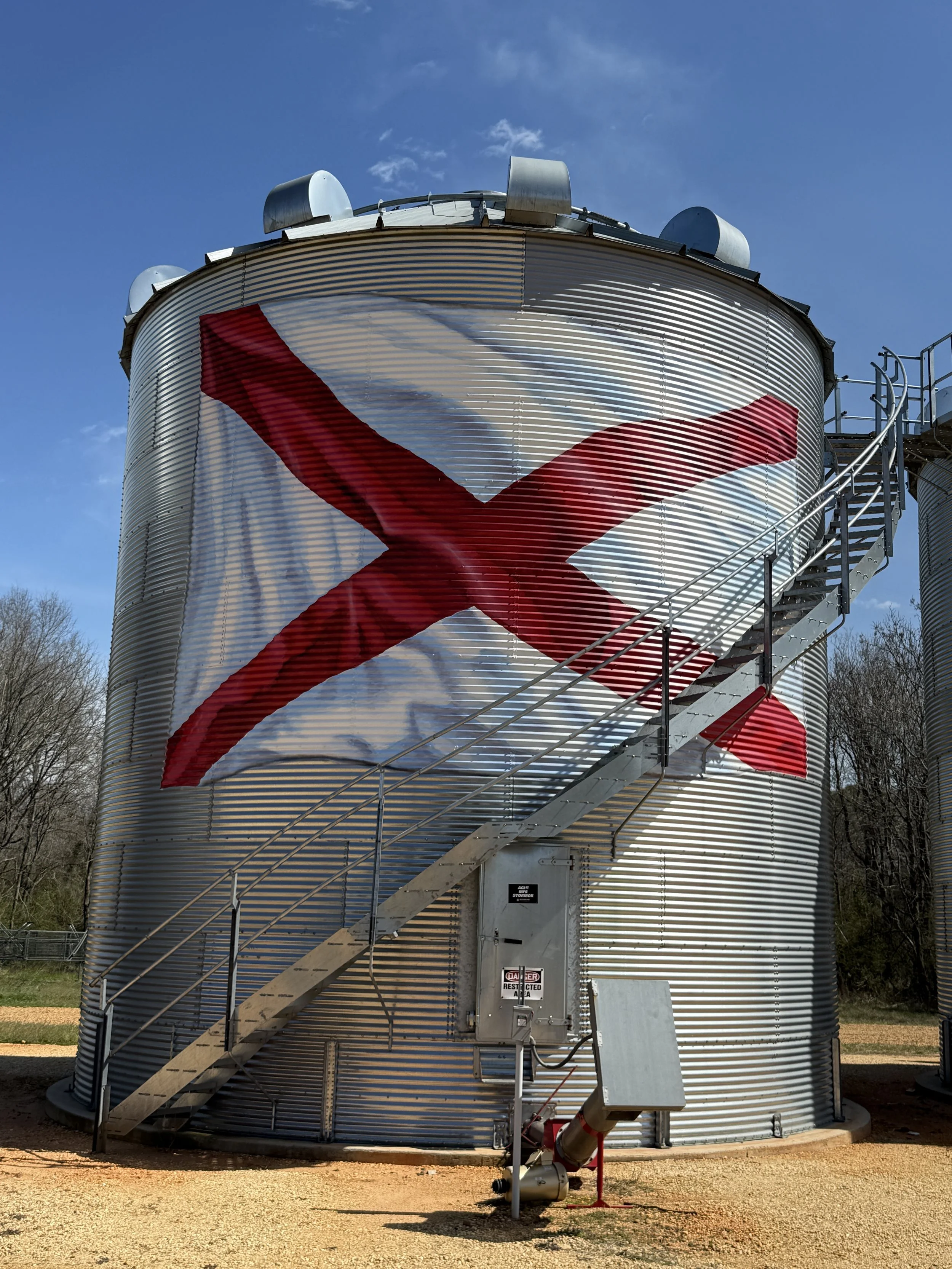
Alabama mural artist Banks Compton transformed two corrugated-metal grain silos on private agricultural property outside Selma, Alabama, into monumental works of art celebrating state and national identity.
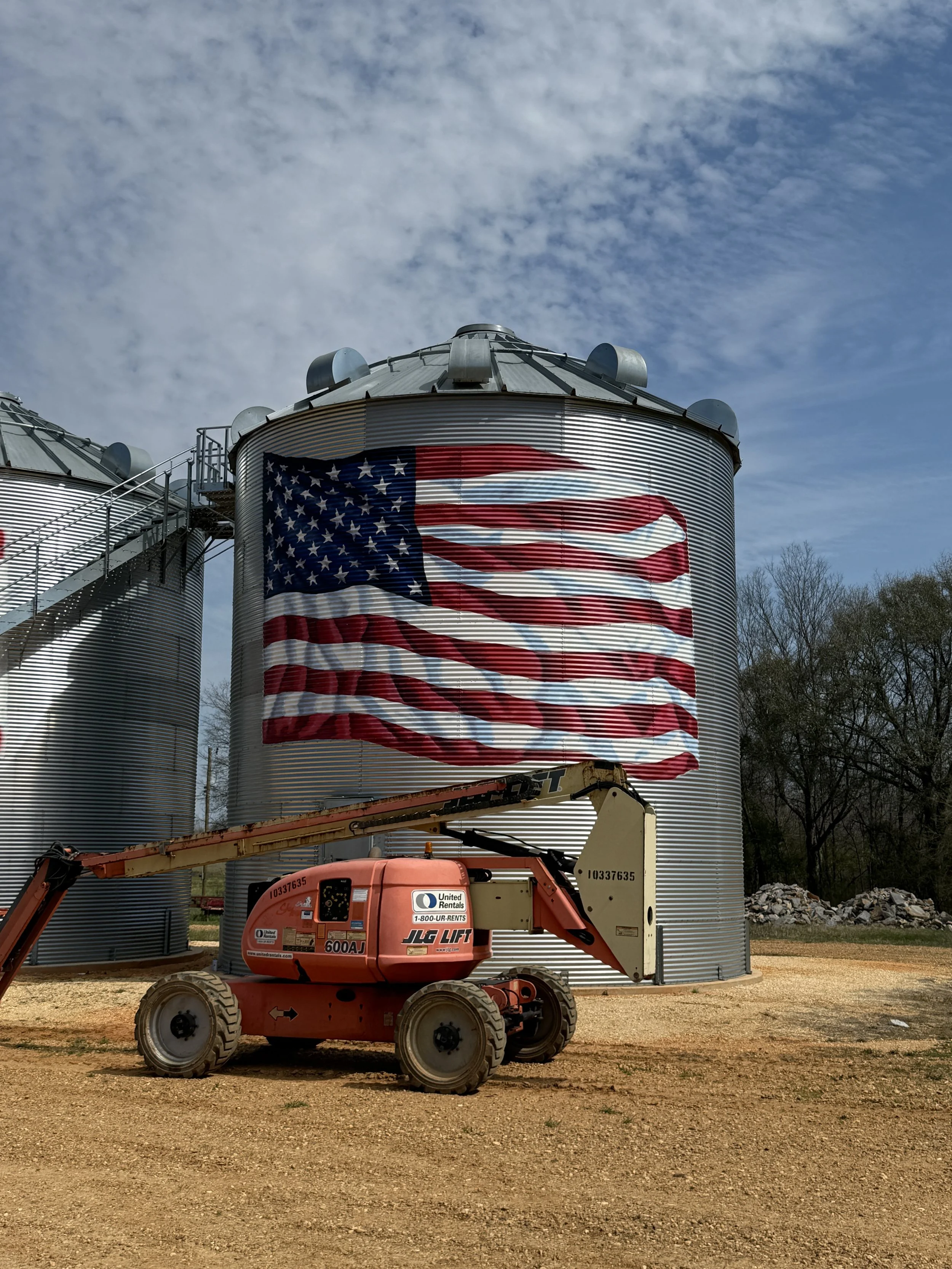
One silo features the Alabama state flag, while the neighboring silo displays a large American flag appearing to wave across the curved metal surface.
Set within the rural agricultural landscape, the murals transform two functional farm structures into highly visible landmarks while maintaining their connection to the land and agricultural setting around them.
Painting Alabama Pride on Two Grain Silos
Project at a Glance
Project: American & Alabama Flag Silo Murals
Location: Near Selma, Alabama
Artist: Banks Compton
Property: Private Agricultural Property
Artwork: Two Exterior Grain Silo Murals
Featured Imagery: American Flag & Alabama State Flag
Surface: Corrugated Metal Grain Silos
Setting: Rural Alabama Agricultural Landscape
Featured In: Georgia-Alabama Land Trust's Conservationist Magazine
Completed: 2025
Art, Agriculture & Conservation
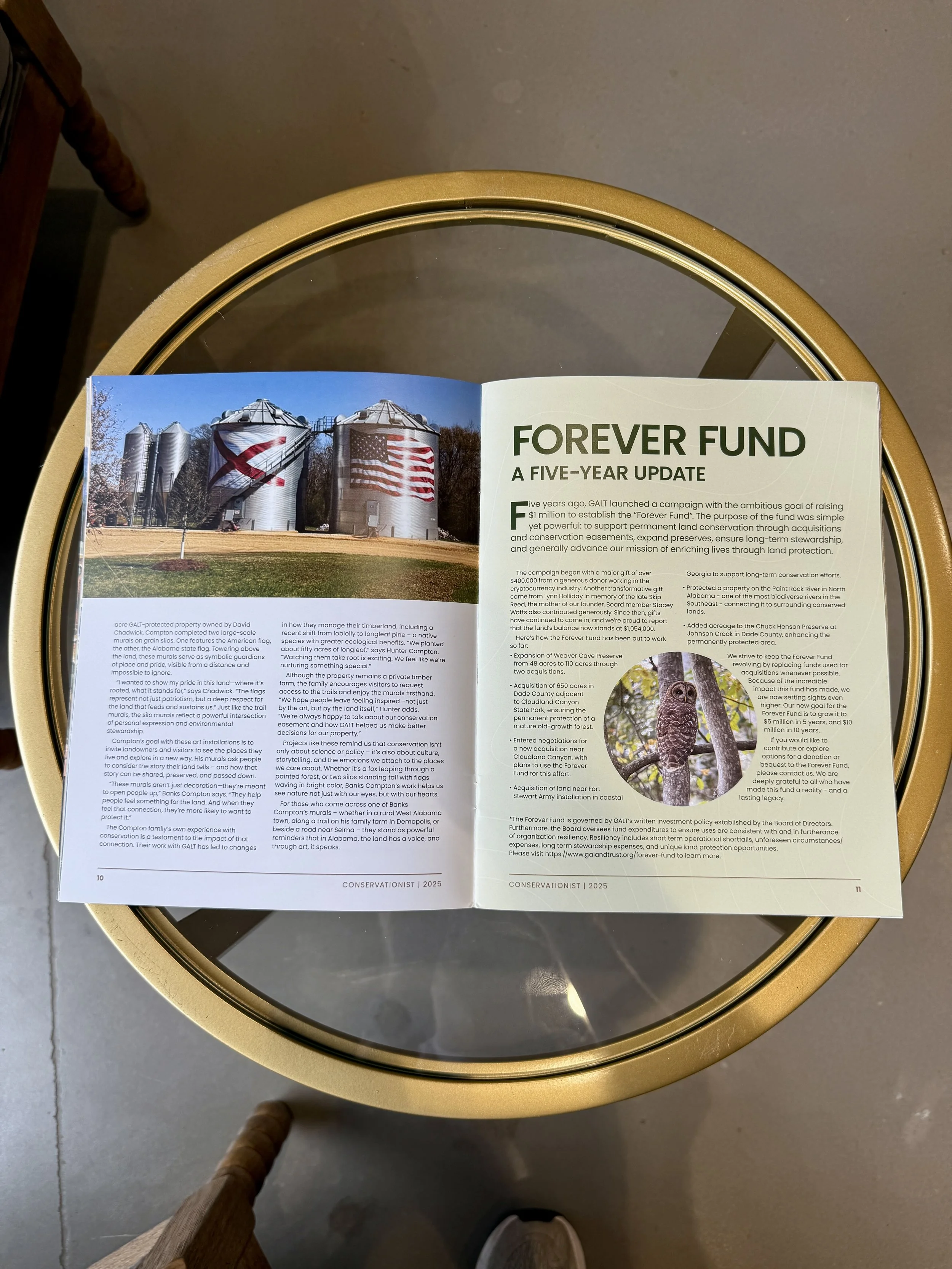
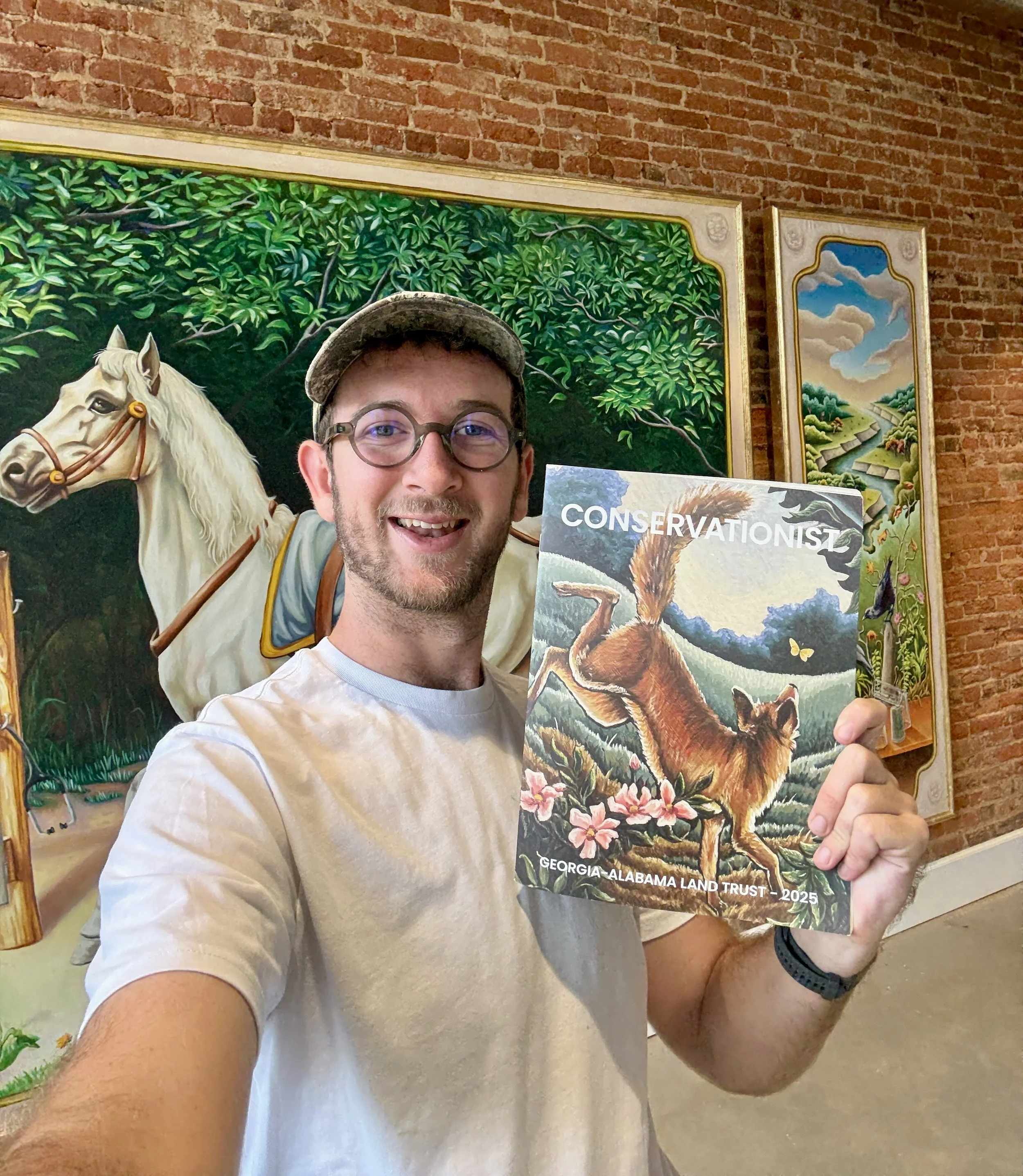
The silo murals were later featured in the 2025 edition of Conservationist, the annual magazine of the Georgia-Alabama Land Trust.
The feature explored Banks' murals in the context of art, land stewardship, and the stories people attach to rural landscapes.
The article specifically describes the flag silos near Selma as an example of the intersection between personal expression and environmental stewardship, connecting the artwork to the agricultural landscape where it exists.
The Georgia-Alabama Land Trust works throughout the Southeast to protect agricultural land, forests, wetlands, wildlife habitat, scenic landscapes, and other natural resources. The organization currently reports protecting more than 518,000 acres across over 1,360 properties.
Two Flags Across an Alabama Landscape
The concept for the project was intentionally bold and straightforward.
Across one silo, Banks painted the red diagonal cross of the Alabama state flag, dramatically enlarged to wrap around the cylindrical structure.
The second silo features the American flag, with folds and movement painted into the composition so that the flag appears to ripple across the corrugated metal.
Together, the two silos create a paired composition that can be viewed across the surrounding property.
Their scale allows the imagery to remain immediately recognizable from a distance, while the unusual corrugated and curved surfaces reveal the physical character of the agricultural structures up close.
Turning Agricultural Structures Into Landmarks
Grain silos present a very different challenge from a conventional flat mural wall.
The cylindrical shape changes how an image is perceived depending on where a viewer is standing, while the corrugated metal surface creates hundreds of ridges that must be incorporated into the painting process.
Instead of attempting to disguise the industrial nature of the structures, the murals allow the silos to remain visibly agricultural.
The artwork becomes part of their existing architecture.
The result demonstrates how murals can transform barns, silos, tanks, warehouses, and other utilitarian structures into landmarks without removing the character that makes those structures distinctive.
Telling the Story of Rural Alabama
Public art is often associated with downtown buildings, but rural landscapes contain their own architectural landmarks.
Barns, water tanks, agricultural buildings, and grain silos tell stories about how land has been used and cared for across generations.
Painting these structures creates an opportunity to introduce art into places where people may not expect to encounter it.
For Banks, projects like the Selma silo murals are also an extension of his interest in creating artwork that responds directly to its environment.
Rather than separating the artwork from the agricultural landscape, the landscape becomes part of the experience of viewing it.
Featured in Conservationist
The Georgia-Alabama Land Trust featured Banks and the silo murals in its 2025 Conservationist magazine as part of a larger story examining the relationship between art, storytelling, land, and conservation.
The article explains that Banks' work encourages viewers and landowners to think about the stories their land tells and how those stories can be preserved and passed to future generations.
That makes the silo project more than a transformation of two agricultural structures.
The murals demonstrate how artwork can draw attention to landscapes that might otherwise be passed without a second look—and encourage viewers to consider the history, identity, and value attached to the land surrounding them.
Murals Beyond Traditional Walls
Large-scale artwork does not have to be limited to brick buildings.
Banks creates murals on a variety of architectural and industrial surfaces, including corrugated metal, agricultural structures, tanks, and other unconventional spaces.
Each surface presents its own challenges, but also creates opportunities for artwork that could not exist on a conventional wall.
The Selma project demonstrates how two ordinary grain silos can become monumental canvases while continuing to function visually as part of a working rural landscape.
About Banks Compton
Banks Compton is an Alabama mural artist and RISD alumnus creating large-scale murals and public art throughout Alabama and across the United States.
His work frequently explores nature, local culture, community identity, and the relationship between artwork and the environments where it is installed.
From downtown buildings and libraries to schools, agricultural structures, and rural landscapes, Banks develops each mural specifically around its location, client, and story.
Looking for a Silo or Agricultural Mural Artist?
Banks creates large-scale murals for farms, private properties, agricultural businesses, rural communities, conservation organizations, industrial facilities, cities, and businesses throughout Alabama and beyond.
Projects can be developed for grain silos, barns, corrugated-metal buildings, tanks, warehouses, agricultural facilities, and other unconventional exterior surfaces.
IN THE PRESS
FEATURED IN
Georgia-Alabama Land Trust — Conservationist Magazine
2025 Conservationist — Art, Land & Storytelling